 Skip to main content.
Blog
Connected Industries at MWC26 Barcelona: Exploring the Future of Enterprise and Innovation
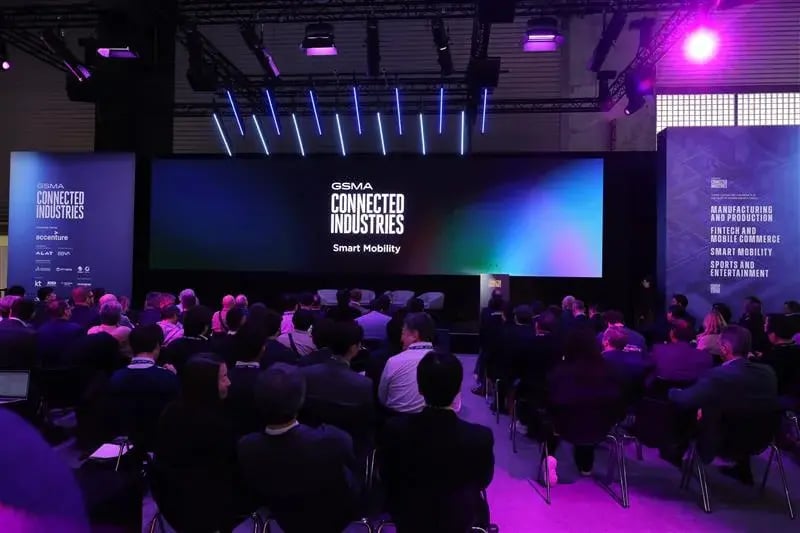
Richard Cockle, Head of GSMA Foundry and Connected Industries, answers questions on the key themes shaping Connected Industries at MWC26 Barcelona.
What are the key highlights and innovations attendees will experience at connected industries during MWC26 Barcelona?
This year Accenture is featured as the GSMA’s Connected Industries Knowledge Partner, bringing deep industry and technology expertise into the programme.
Visitors will experience a showcase of real-world digital transformation across sectors including manufacturing and production, fintech and commerce, smart mobility, and sports and entertainment.
From AI-driven aviation systems and IoT-enabled manufacturing automation to smart city infrastructure, the event demonstrates what connectivity can achieve now and where it is taking industries next. The agenda also includes practical learning through masterclasses on sovereign AI and private networks, providing frameworks and tools for developing effective enterprise strategies based on real-world examples.
In what ways are connected technologies driving the evolution of sectors like manufacturing and production, fintech and commerce, smart mobility and sports and entertainment?
Connected technologies are driving the evolution of sectors such as manufacturing and production, fintech and commerce, smart mobility, and sports and entertainment by embedding AI, 5G, IoT, cloud, and secure connectivity into core operations to create more intelligent, automated, and data-driven ecosystems. In manufacturing, AI-driven automation, IoT sensors, private networks, cybersecurity, edge intelligence and predictive maintenance are converging with digital twins to enable more autonomous, adaptive and resilient industrial operations; in fintech and commerce, mobile-first platforms, AI-powered fraud and risk detection, digital wallets, and cross-border payment innovations are enabling new business models while increasing the importance of trust and cybersecurity; i Advanced connectivity and AI support autonomous vehicles and aviation systems through real-time situational awareness, smarter traffic management, and safer operations integrated with smart infrastructure, while in sports and entertainment, smart venues, immersive AR/VR experiences, 5G-enabled broadcasting, and data-led fan engagement are transforming how events are delivered, experienced, and monetised, collectively showing how connected technologies are reshaping industries toward more responsive, efficient, and opportunity-rich futures.
Beyond traditional connectivity services, what new opportunities exist for telecom operators to expand their business?
Beyond traditional connectivity services, operators have the opportunity to move from a pure infrastructure role to becoming strategic partners across multiple industry verticals. By combining their network leadership with capabilities in cloud, AI, cybersecurity and edge computing, telcos can co‑develop solutions with technology vendors, integrators and sector specialists. This enables them to address complex enterprise needs in manufacturing, fintech, smart mobility, and sports and entertainment ranging from automation and predictive maintenance to secure payments, autonomous transport, and immersive fan experiences. Rather than acting solely as connectivity providers, operators are increasingly forming multi‑party partnerships that deliver integrated platforms, joint go‑to-market models, and outcome-driven services tailored to each vertical’s specific challenges and opportunities.
What factors are pushing telecom operators to innovate, and what organisational mindset or cultural shifts are needed to succeed in this transformation?
Telecom operators are under pressure to innovate for several reasons. Enterprises increasingly expect integrated technology solutions, not just connectivity, especially as AI and cloud capabilities become critical across industries. Rapid technology advancements and competitive pressures from cloud providers, security specialists and digital native companies are accelerating the need for telcos to broaden their offerings.
To succeed in this shift, operators need a business-driven mindset, aligning propositions with enterprise needs, being customer centric, and fostering agility and innovation. There is also a growing emphasis on security and resilience as digital transformation initiatives proliferate. Operators that embrace these cultural shifts and adopt enterprise-oriented solution strategies are better positioned to unlock new revenue streams and meaningful value for customers.
How is the GSMA helping to foster collaboration and innovation across industries, and what benefits does this bring to operators and enterprises?
The GSMA is providing a collaborative environment for cross sector innovation through its connected communities initiative, designed for operators and industry players to work together on shared digital transformation goals. These communities bring together operators, industry leaders, technology vendors and other relevant stakeholders to share insights, co-develop solutions and accelerate real-world deployment of technologies across sectors such as manufacturing and production, fintech and commerce, smart mobility and sports and entertainment Through shared market intelligence, whitepapers, reports, case studies, and ecosystem building, connected communities help operators and enterprises translate emerging technologies into tangible business outcomes and new commercial opportunities.